Divinize
An in-depth analysis of ROSALÍA's core single "Divinize" from the album "LUX". The article starts from the rhythmic dislocation of the 5/4 time signature, combined with the reconstruction of mysticism and religious imagery, exploring how pop music internalizes the "female body" and "divinity". An interdisciplinary music review that weaves between sensory experience and cultural text.
#Starting with the song's place in 'LUX'
It sits in the first half of the album, right after the noun 'Reliquia,' continuing the sense of offering oneself to the world from the previous track, while also introducing for the first time the core verb 'divinize'—meaning to treat something as divine.
ROSALIA herself explained this word. She said she learned this verb while making the album and was immediately drawn to it because it points to an experience: when a person returns to their own center, light can pass through them, and creation thus relates to divinity. This explanation is crucial—it almost determines how the entire song should be read.
Thus, 'Divinize,' as the first keyword in 'LUX' that appears as a verb, marks the album's shift from concept to feeling, and further from religious imagery into the body and sound.
#Intro
From the very first notes of the intro, we can sense how 'Divinize' differs from the first two songs in surface sonics. The beginnings of the previous two tracks felt more wandering, mixed, and not fully settled; this one sounds much more orderly, built mainly on piano block chords, overall more restrained and structured.
But upon further analysis, this 'orderliness' is only a surface phenomenon; the internal instability hasn't truly disappeared. Its chaos is not mainly reflected in the stacking of timbres or the blending of textures, but is hidden within the rhythmic structure.
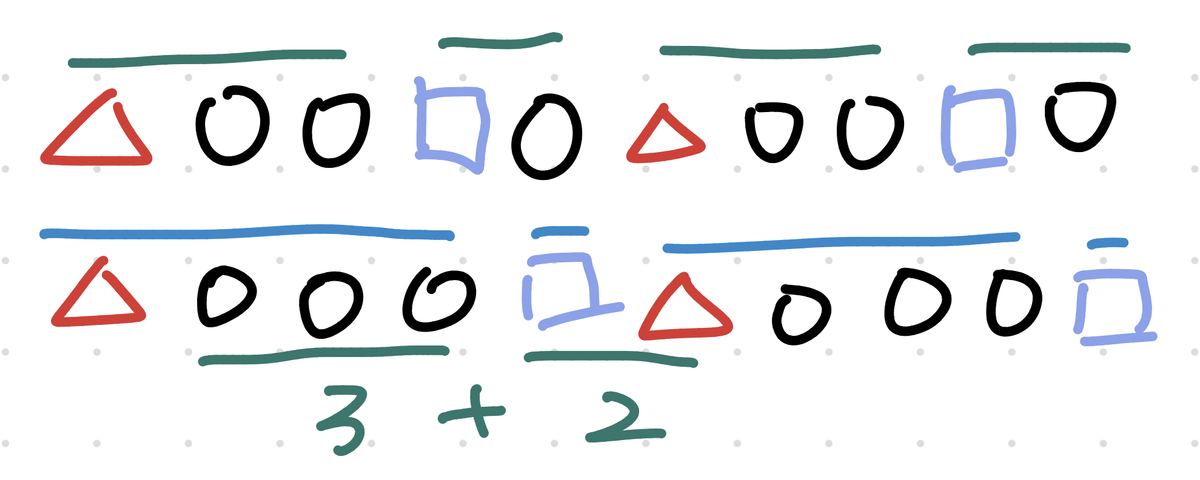
Listening by accents, this section can basically be understood as 5/4 time, with an accent pattern close to strong, weak, weak, secondary strong, weak—that is, a clear 3+2 structure. Compared to the first two tracks, this song has fewer classical elements; it's more like a pop song. So what's really worth focusing on here is not how complex the harmony is, but how the lyrics and rhythm work together.
Odd time signatures naturally bring a sense of instability. Unlike even meters, which are symmetrical and steady, they always give a feeling of leaning forward, rushing the beat, yet suspended without landing. For this reason, although the intro of 'Divinize' is more 'orderly' than the previous two songs, its underlying character remains unsettled.
This also maintains continuity with the previous work. The intro of the previous song 'Reliquia' also slides directly into the verse accompaniment without an obvious break; this song continues the same treatment. The intro is not just atmosphere setting but also reveals the logic of the verse accompaniment from the start.
#ACT I
Verse
Fruita roja i rodona, ¿qui l'endevina?
Red and round fruit, who can guess it?
Òbviament és la poma que està prohibida
Obviously it is the forbidden apple.
I si només la mires, et salvaries
And if you only look, you would be saved.
Et però sense mossegar
Yet without biting.
“Red and round fruit” hardly needs guessing—it points directly to the forbidden fruit in Genesis. This image is classic, but also particularly sensitive today. Because in long religious and cultural narratives, Eve and the apple have often been portrayed as symbols of “gullibility, weakness, and leading others into sin.” For a long time, this image was indeed used in the West to legitimize women’s subordinate position in religious and secular society, even serving as theological justification for oppressing women.
But what ROSALÍA is concerned with here is not “fall” itself, but a more specific question: the difference between looking and biting.
“If you only gaze, perhaps you can still protect yourself; the premise is, don’t take that bite.”
In other words, what truly changes a person is not desire appearing as a thought, but the moment the body completes it. The matter doesn’t stay at “thinking,” but passes through the mouth, teeth, swallowing, and finally becomes an irreversible experience.
Thus, the originally theological and moral question is pulled back by ROSALÍA into bodily experience. She doesn’t discard the ancient motif of the “forbidden fruit,” but retains its most core symbolic framework, shifting the focus from “moral preaching” to “how the subject is generated through experience.” The apple is no longer just evidence of sin, but becomes an entry point for desire, perception, and transformation.
So the important part here is not just that she reuses a religious symbol, but that she returns the interpretive authority, long monopolized by the institution, back to the body and feeling.
Pre-Chorus
This ghost's still alive, I'm still alive
This soul is still alive, I am still alive.
Està més viva que mai, més viva que mai
More alive than ever, more alive than ever before.
Although this short passage is very brief, it accomplishes the first true narrative leap.
The "ghost" in "This ghost's still alive" can be understood as a self that was once suppressed, harmed, or denied, or as those parts driven away by morality, order, or emotional trauma. And "I'm still alive" seems to be a reaffirmation of one's own existence after experiencing a fall, damage, or disintegration.
The "still alive" here not only carries connotations of Christian resurrection but also subtly approaches a Dionysian logic of life: the subject does not confirm itself in a state of wholeness, stability, or intactness; rather, after shattering, injury, and loosening of boundaries, it reveals a stronger vitality.
That is why the phrase "more alive than ever" follows. Because the traditional forbidden fruit narrative is more concerned with whether you have transgressed and whether you have fallen after transgression; but what is truly cared about here is whether a person can regenerate themselves after experiencing destruction.
Nietzsche was absolutely anti-Christian, so there is still a considerable gap with Nietzsche here. Rosalia still retains mystical vocabulary such as "light", "grace", and "sanctification".
Chorus
Through my body you can see the lightThrough my body you can see the light
Bruise me up, I'll eat all of my prideEven if bruised and battered, I willingly swallow all my pride.
I know that I was made to divinizeI know that I was born to make everything divine.
Outside me, inside meOutside me, inside me
Outside me, inside meOutside me, inside me
“Through my body you can see the light” is almost the master key to the entire song 'Divinize'.
In many traditional religious or moral narratives, the body often represents desire, weakness, defilement—something to be suppressed, purified, or even transcended. But here, the body becomes the organ that 'manifests light.' Light is not the opposite of the body, nor does it exist in a completely disembodied spiritual realm; rather, it only becomes truly visible through the body.
This is crucial because it implies that divinity is not in some beyond, but within the flesh itself—within sensation, endurance, and touch.
Pitchfork described it as a 'modern scripture' dedicated to the contemporary condition of women. If we consider this song from ROSALIA's identity and position, the 'my body' here is not merely a private body. It is also a public body being watched, expected, projected with desires, and constantly pulled by creative pressure. So 'through my body' carries another meaning: what you see through me is not just me, but also how this era views the body, handles desire, and feels spiritual scarcity.
Musically, this section also noticeably intensifies the sense of physicality. After the percussion enters, the originally stable 3+2 is disrupted. You can hear an internal propulsion similar to 4+1, yet it remains within the quintuple meter cycle, so the final perception is not a 'change of meter,' but a new way of experiencing force within the same meter.
Especially the final roll, which sounds like a heartbeat, or some life rhythm moving beneath the body. Its accents do not fully coincide with the vocal accents, creating a slight dislocation—like a gait that's bumped, not enough to fall, but never able to return to the most comfortable position.
This echoes what the lyrics are saying. Here, sanctity does not completely eliminate chaos; instead, it establishes a new order within chaos.
The violin staccato is also important. Its accents are not perfectly aligned with those of the percussion and vocals, so this section actually has several different accent trajectories simultaneously. That's why, even though the chorus gives us a central theme to hold onto, the rhythm always retains a gap of 'non-conformity.' This fits perfectly with the overall aesthetic of LUX: it writes about a sanctity with cracks, not flawless sanctity.
“Bruise me up, I'll eat all of my pride” sounds abrupt at first, but after the previous line, it becomes clear. It means: the dislocated relationship between 3+2 and 4+1 is like ROSALIA's reconstruction of the 'apple' story—sanctity does not eliminate chaos, but establishes a higher order within chaos.神圣不是把混乱消灭,而是在混乱内部建立一种更高层次的秩序。
What is the wound? I think it's very complicated, so for now I'll describe it as the harm caused by being disciplined, named, and suppressed, along with the shock that This ghost's inevitably experiences in the process of transformation, as we mentioned earlier.被规训、被命名、被压抑带来的伤害,以及前面我们所说的 This ghost's 在经历转化的过程当中,他必然会受到的一种冲击。
Swallowing pride is because 'pride' in many religious and mystical traditions is precisely the thing that most prevents people from approaching something higher. If you are too full, there is no space; if you are too self-centered, the light cannot pass through. This can be understood as the price of divinization.
That's why the next line is 'I know I was born to make everything manifest divine.' This is not a frivolous self-aggrandizement; its premise is precisely the wearing away of the self and the loosening of boundaries.
The following 'Outside me, inside me' further articulates this boundary change. The distinction between inside and outside is no longer clear, and the line between me and the world, me and others, me and something greater begins to blur. This also echoes the image of the dolphin that appeared earlier in 'Reliquia'.
#ACT II
Verse
De tu sempre té gana, tu ets el rei que la mana
She always craves you, and you are the king who commands her.
她始终渴求着你,而你是支配她的王。
She feels more loved, the body's vertigo
She feels more loved, and her body falls into dizziness.
An absence that sates, chasing after grace
An absence that brings fulfillment, she chases grace all the way.
Pain a delight, the divine emptiness
Pain becomes sweet, and emptiness is tinged with divinity.
And the moonbeams nourish her with cold
The silver threads of moonlight feed her with coldness.
And self-denial is the indulgence she practices for love
And restraining herself is the indulgence she practices out of love.
At this point, the pronoun begins to shift. Earlier it was the first-person “I” speaking, but here it gradually turns into a narration about “her.” Because of this, the tone of this passage is no longer a direct statement of personal experience, but rather more like a parable or a piece of mystical text.
"She is always hungry," "she is more loved," "she chases grace," "pain is a delight, emptiness is sacred."
These sentences are valid not because they conform to everyday logic, but because mystical experience is inherently difficult to articulate neatly in ordinary language. It can only repeatedly resort to oxymorons to approach a state that is both real and ineffable.
ROSALÍA has mentioned in interviews and reports that she did extensive reading for 'LUX,' engaging with female hagiographies, mystical poetry, and works by writers such as Simone Weil and Rabia. AP's report also quoted Victoria Cirlot, a humanities scholar at Pompeu Fabra University in Barcelona, who judged that although 'LUX' is only a 'minimal sample' of the mystical tradition, it indeed brings complex religious concepts into the popular context.
For example, 'absence brings satisfaction.' This sounds contradictory, but it precisely points to an experience: not getting something makes it more intense; absence keeps desire active; incompleteness itself constitutes the density of experience. Grace is not something you grasp and it's over; it always carries a distance and a quality of being never fully possessed.
'Pain becomes sweet' and 'emptiness takes on divinity' follow the same logic. Pain here is no longer merely negative; it becomes an intensity, a proof, a way for experience to truly materialize.
This closely resembles the logic of 'seeking grace' in religion. Grace is not something you seize and be done with; it always retains a distance, a quality of being never fully possessed. This also has some connection to the eternal cycle mentioned earlier in 'reliquia.'
Pain here is no longer merely negative; it becomes an intensity, a proof, something that makes experience real.
If the earlier 'forbidden fruit' part mainly set up a symbolic framework, then here the song truly begins to write about what happens inside the subject after transgression. She does not obtain simple joy but enters a more complex state: hunger, dizziness, satisfaction in absence, sweetness in pain, divinity in emptiness, and indulgence within restraint.
Musically, this section also has corresponding changes.
Without rushing to define the timbre too rigidly, one can clearly hear that the plucked strings and percussion textures are more prominent, the overall sound is drier, thinner, and more skeletal.
Given Rosalía's nationality, it's hard not to suspect that the thick ethnic flavor in this timbre comes from local Catalan instruments. But upon closer listening, it really sounds like violin pizzicato, rather than something like a ukulele guitar. The percussion also resembles the striking sound of a modern resonance box instrument, though I'm not entirely sure.加泰罗尼亚本地的乐器,但其实我仔细一听,这个是真的有点像小提琴在拨弦,而不是那种类似于尤克里里的吉他,然后打击乐也有点像是那种现代共鸣箱乐器,敲击的声音,但这里我也不是很确定。
Rhythmically, the earlier 3+2 becomes closer to 2+3 here. If 3+2 feels like opening up then closing, then 2+3 feels more like a short burst that gets stretched and suspended.3+2 到这里更接近 2+3。如果说 3+2 给人的感觉是先铺开再收束,那么 2+3 更像是先短促启动,再被拖长、悬住。
This matches the 'dizziness' in the lyrics. Because what changes isn't the speed itself, but the bodily sensation. Originally moving forward, now it's like being yanked sharply and then suspended in midair.
Especially when singing 'I els rajos de la lluna la nodreixen de fredor', the sliding of the accent center becomes more noticeable.“I els rajos de la lluna la nodreixen de fredor” 的时候,这种重音中心的滑动会更明显。
Quintuple meter is not the default bodily rhythm for most pop songs. Once the internal accents switch from one grouping to another—since the official document gives BPM = 96, meaning it's actually a very slow quintuple meter, and Rosalía's piece feels like it's composed of two 5/8 sections—so not only is there a shift in accents within the quintuple meter, but also under the larger structure, the accents of the two 5/8 sections shift.
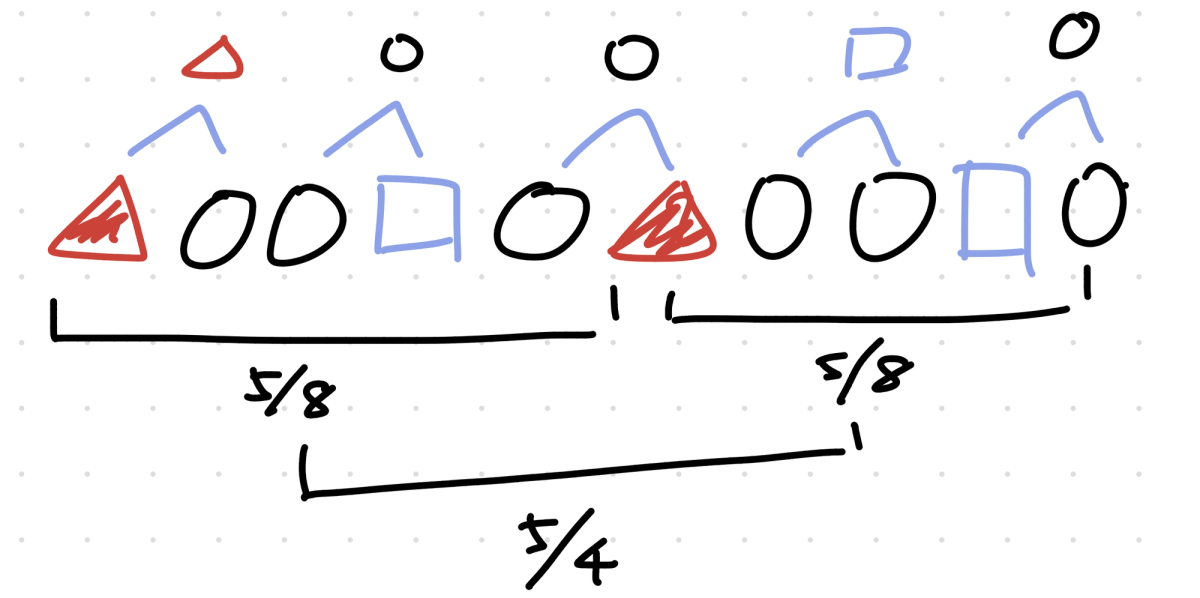
Still in quintuple meter, but it's like the floor has changed beneath your feet. Listeners feel their body remains, but the center is moving. This is precisely one of the core experiences of 'Divinize' as a whole.
The body is still here, but its center is shifting; the person is still alive, but the boundaries are loosening.
Pre-chorus
Each vertebra reveals a mystery
每一节脊骨,都显露一道秘密。
Pray on my spine, it's a rosary
沿着我的脊柱祈祷吧,那是一串念珠。
If the previous parts were still reusing traditional religious imagery, this section is one of the most powerful inventions in 'Divinize'.
It thoroughly internalizes external religious objects. A rosary is originally held in the hand, used to count prayers, something outside the body; but ROSALIA directly says here: pray along my spine, because my spine itself is a rosary.
They thoroughly internalize external religious objects, linking the spine with the rosary. The rosary was originally a handheld object for counting prayers, external to the body; but ROSALÍA directly says: pray along my spine, because it itself is a rosary. Each vertebra reveals a mystery, the body is experience, and experience is the revelation of religion. She unites the most rejected bodily experience in religion with the most sacred part, merging them into one.
For a long time, the female body has been either sexualized or sanctified—the former belonging to consumption, the latter to discipline. But 'Divinize' makes the body both a body of desire and a body of prayer. It refuses to separate the two. Hence, the truly radical aspect of this song is not the collage of 'sexiness + religion,' but its refusal to acknowledge that they must be mutually exclusive.
The AP article mentions that the throat is seen as the body's gateway to divinity in many religious traditions. If we apply this insight horizontally to 'Divinize,' we find that ROSALÍA does the same thing repeatedly throughout the album: re-sacralizing bones, throats, tears, mouths, wounds, and breath.
Here, the music does not retreat behind the lyrics; rather, it accomplishes the same thing together with the lyrics.
Musically, this idea is realized with extreme precision. The original quintuple meter does not maintain a stable, even propulsion in this section. This section transforms the original five-beat measure into four beats—that is the answer given by the low strings. Instead, through changes in internal accents and durational distribution, it creates a floating sensation akin to a 'scattered beat,' as if the clear steps are quietly scattered, the body loses its stable center of gravity, and can only move forward in uneven tension.
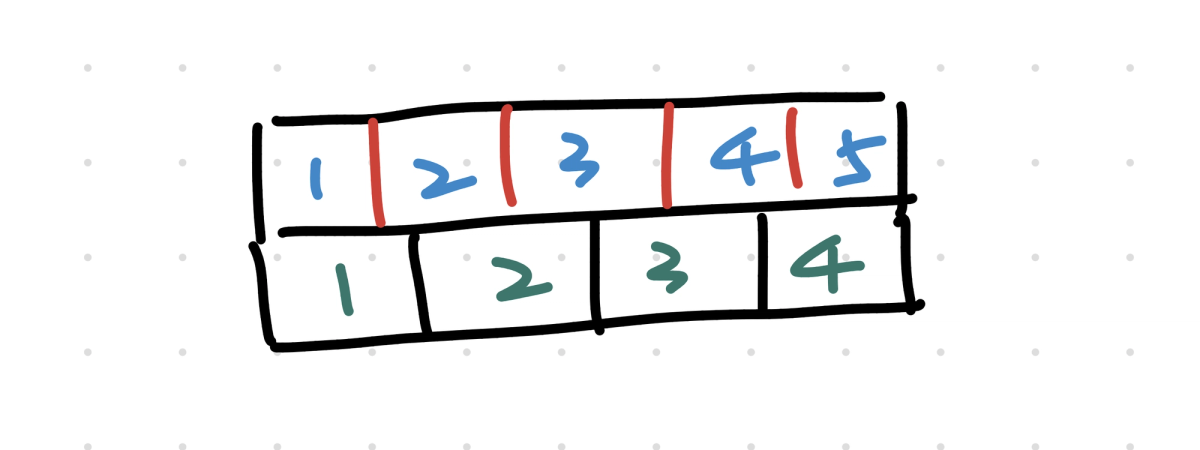
At the same time, the bass line carries a heavy falling sensation, like a large string of prayer beads being slowly turned. It makes this section not just 'mysterious' but also weighty. Rhythm, low frequencies, and lyrical imagery truly converge here.
Moreover, earlier at "I els rajos de la lluna la nodreixen de fredor," there was already a feeling of being drawn out and stretched; at the end of this section, this treatment appears again, before being restored, directly pushing into the chorus. Thus, after a brief shift, the accents return to their original positions.“I els rajos de la lluna la nodreixen de fredor” 处已经出现过一次被拖长、被拉开的感觉;到了这一段结尾,这种处理又再次出现,随后才被补回,直接推入副歌。于是重音在短暂偏移之后,又回到了原来的位置。
Chorus
Through my body you can see the lightThrough my body, you can see that light.
Bruise me up, I'll eat all of my prideEven if bruised, I willingly swallow all my pride.
I know that I was made to divinizeI know I was born to make all things divine.
Outside me, inside meBeyond me, within me.
Outside me, inside meBeyond me, within me.
#Bridge
The lines of her body blur until the boundary is lostThe lines of her body are dissolving until all boundaries are gone.
Not everyone will understand, and she does not expect itNot everyone understands, and she never expects that.
You think it's the end, but it's just the beginning.They thought it was the end, but actually everything was just beginning.
After layer upon layer of buildup, at the bridge, the song stops explaining and simply enters the transformation itself.
The disappearance of boundaries means the clear line between subject and object, body and light, desire and faith, inside and outside begins to blur. We earlier mentioned the dissolution of subjectivity—it is actually the necessary condition for light to pass through the body. The 'oneness' experience, repeatedly emphasized in Nietzsche's 'Dionysian frenzy' and in mysticism, destabilizes personal boundaries, robbing language of its naming power. This is the beginning of the 'sacred,' and also the beginning of music as an art.
This is not just Rosalia's life philosophy, but also her artistic pursuit. Some commentators marvel at its ambition, seeing it as an expansion of the boundaries of contemporary pop music. Hence arises a problem of 'multilingualism, over-interpretation, and high conceptualization,' which imposes unprecedented demands on the listener.
This is precisely the ultimate unfolding of the earlier line 'Through my body you can see the light.' Only when the body is no longer seen as a closed, rigid thing belonging solely to 'myself' can light truly pass through.
Thus the following 'Not everyone will understand, and she never expects them to' refers not only to the threshold of understanding the work, but more to the fact that this experience itself cannot be instantly shared by all. It does not exist to please, nor does it need to be immediately understood universally.
Its posture is not to please, but to wait for those who truly enter.
For the following appreciation, set aside everything. You can choose to keep in mind what I've shared, or forget it. Let's listen with our hearts, through our own experience, with our purest natural reactions, to appreciate the final chorus and outro.
#Chorus
Through my body you can see the lightThrough my body, you can see that light.
Bruise me up, I'll eat all of my prideEven if bruised and battered, I willingly swallow all my pride.
I know that I was made to divinizeI know I was born to make all things divine.
Outside me, inside meOutside me, inside me.
Outside me, inside meOutside me, inside me.
By the time we reach this final chorus, the lyrics haven't changed, nor has the melody, but the feeling and meaning are completely different. Because through the layered progression earlier, the same line 'Through my body you can see the light' first appeared more like a proposition; now, it feels more like something that has been experienced and proven.
The change comes mainly from the vocal delivery and instrumentation. Precisely because of this, the power of 'thematic recurrence' is particularly strong here. The things that appeared earlier all come back at this moment: wounds, rosary beads, boundaries, nothingness, and that sense of physicality that never fully settled.
If I were to describe it with a very intuitive image, I'd say this final chorus is a bit like a slow-motion replay.
The earlier chorus, with its heavy low-end and strong rhythm, was more like the body enduring tension; while this final chorus feels like that tension is stretched out, the body slowly approaching the moment when light shines through. The piano's high register takes back the rhythmic pattern from the intro, bringing a sense of circulation, return, and at the same time, continuous ascent. Then, the violin pizzicato gradually joins in and intensifies, followed by low-end rolls and percussion, slowly gathering back the musical material that appeared earlier.
These elements are not simply layered; together they create a sense of uplifting. It's like a person being slowly lifted by the tension, with tiny cracks appearing in the body. Light first seeps through the cracks, then the cracks widen. By the repetition of 'Outside me, inside me' at the end, the boundaries of individuality are nearly shattered, and then the music moves into the coda.
#Coda
If the final chorus was more like a wide shot, the coda feels like a series of fragmented shots.
It's no longer the overall picture of 'the whole person glowing,' but rather watching how each crack on the body is illuminated by light. The powerful unison of the strings here is especially like the moment light suddenly bursts in. Not a soft, diffused light, but one with a path, with a sense of penetration, cutting through the darkness all at once.
So the lens seems to constantly switch between these cracks. Each push of the strings feels like another fissure opening, another beam of light shining through.
At this point, "Divinize" truly accomplishes not just a rewriting of religious imagery, nor just a renaming of the body. What it ultimately establishes is a model of experience: the body is not the opposite of divinity, damage is not the end, and the loosening of boundaries may instead be where transformation begins.
So the most moving part of this song is precisely not that it gives a definitive answer, but that it lets us briefly believe that light can truly pass through the body.