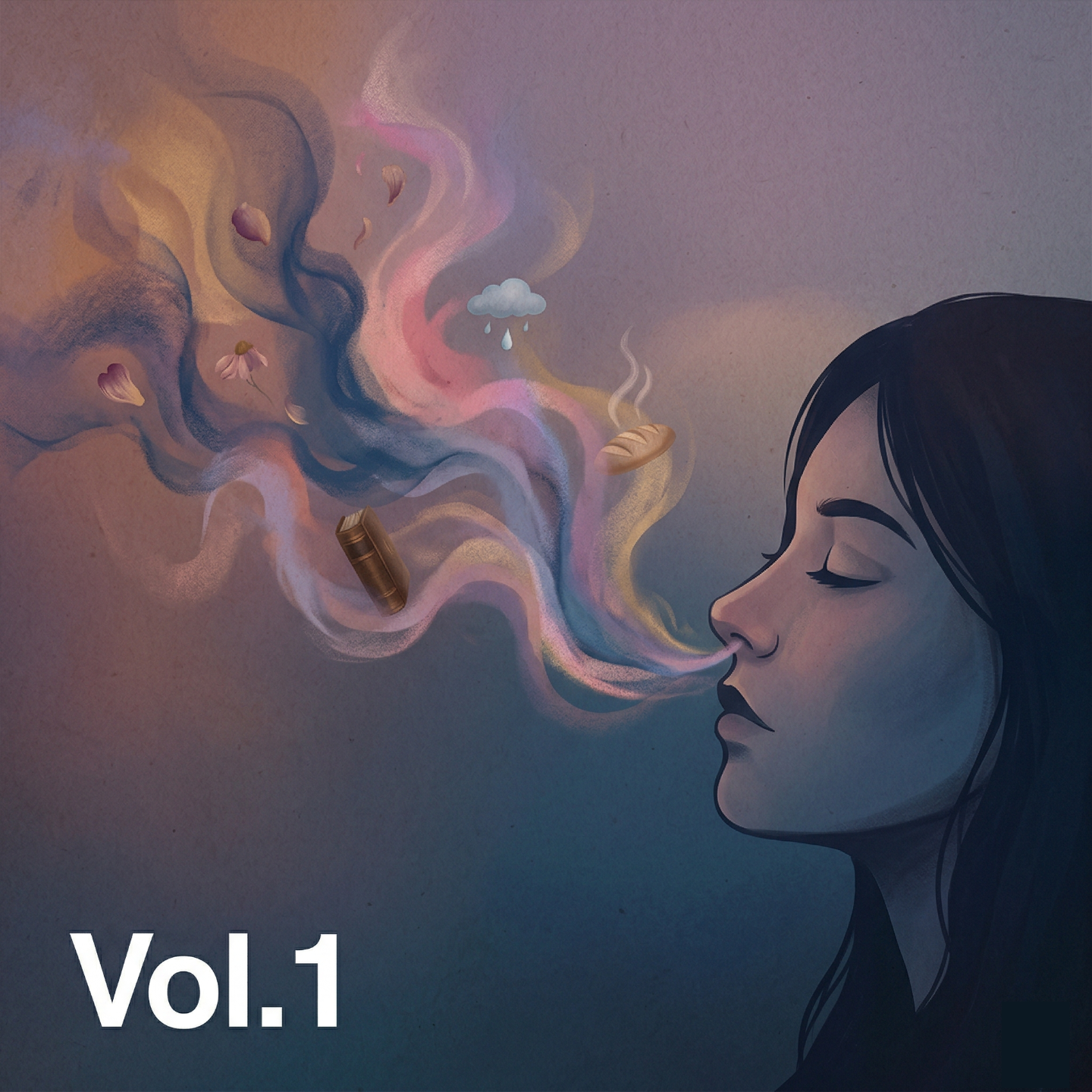
Today I want to talk about something both strange and deeply ordinary: smell.
Most of our attention goes to the visible world. We watch maps, feeds, dashboards, and videos. But we also live in a world we smell.
Take one deep breath. There is probably a scent around you right now.
Human noses can distinguish an astonishing number of odors, yet many of those odors are disappearing quietly.
One day, children reading classic spring prose about wet soil and grass might ask:
- What does that smell like?
- Did people really notice that in daily life?
This is no longer a poetic question. It is becoming an ecological one.
Welcome to A Passport for Your Brain.
In this episode, inspired by reporting from journalist Serena Jampel, we enter the politics and anthropology of smell.
Climate change is not only changing temperatures and species. It is changing the odor profile of the Earth.
Why Smell Is Treated as a Side Character
Modern sensory hierarchy is biased:
- vision,
- hearing,
- everything else.
Why? Because vision and audio are easy to digitize. Screenshots, clips, reposts, cloud sync.
Smell cannot be screenshotted.
You cannot attach “wet pine at dawn” to a message.
So in tech culture, olfaction is disadvantaged by design.
That creates a dangerous illusion:
- only what is visible matters,
- only what can be shared counts.
But neuroscience says otherwise. Smell is tightly connected to memory and emotion. Odor pathways sit close to the amygdala and hippocampus, which is why scent-triggered memory can arrive before language.
Smell is not decorative. It is cognitive infrastructure.
How Climate Change Rewrites Planetary Smell
Three forces are stacking together.
1) Warming
Higher temperatures alter volatile compounds in air.
Even slight shifts can change a forest’s chemical signature. Snow, too, can absorb different atmospheric compounds and smell different under warmer conditions.
This is not just “stronger smell.” It is a changed formula.
2) Pollution
Pollutants interfere with ambient odor environments and may also impair smell function over long exposure.
As heat rises, volatile emissions from materials can increase, further distorting everyday smellscapes.
3) Biodiversity loss
Many smells depend on specific plants, microbes, soils, and humidity cycles. When ecosystems fragment, those smell networks collapse.
Sandalwood, vanilla, bergamot, lavender, and many other scent-relevant plants are climate-vulnerable. If species disappear, associated smells can become culturally inaccessible.
Why This Is Also a Cultural Issue
Smell carries ritual memory.
In many traditions, scent is not optional decoration; it is an active interface linking body, time, and collective identity.
A ritual can keep its shape while losing its sensory core.
When that happens, form survives but transmission weakens.
So “intangible cultural heritage” should include smell, not only text, image, and sound.
Smell Inequality
Not everyone lives in the same air.
Some people live with trees, soil, rain, and seasonal variation. Others live with exhaust, waste, industrial volatility, and closed-space residue.
That difference is not merely aesthetic. It can become an inequality in mood, health risk, quality of life, and emotional connection to place.
If you cannot smell nature, it becomes harder to feel yourself as part of nature.
And if that emotional bridge weakens, climate urgency weakens too.
A Difficult Question
If you permanently lose smell, what else do you lose?
Food experience changes. Memory texture changes. Attachment to home and place changes.
After the pandemic, we already saw that smell loss strongly affects quality of life and mental health.
A world without smell is not only less pleasant. It is flatter.
What Can We Do?
The smell of the Earth may seem like a small thing, but it connects to big systems:
ecology, health, class, culture, memory.
Environmental change is not distant news. It enters your nose, your mood, your family stories, and your sense of belonging.
If this resonates with you, try noticing one smell in your city that is fading, changing, or becoming harder to find. Naming it is already a form of protection.