Why Are Women Invisible in Western Music History?
According to the Donne Foundation's 2023-2024 season report on global symphony orchestra repertoire, works by female composers account for only 7.5%. This article analyzes how women have been systematically excluded from Western classical music history through education, publishing, premieres, criticism, and textbooks, revealing how the 'Canon' has been shaped as a male-dominated historical narrative.
According to the 2023–2024 season global symphony orchestra repertoire analysis report released by the Donne Foundation, after tallying 16,327 works planned for performance by 111 symphony orchestras in 30 countries, the results are astonishing:
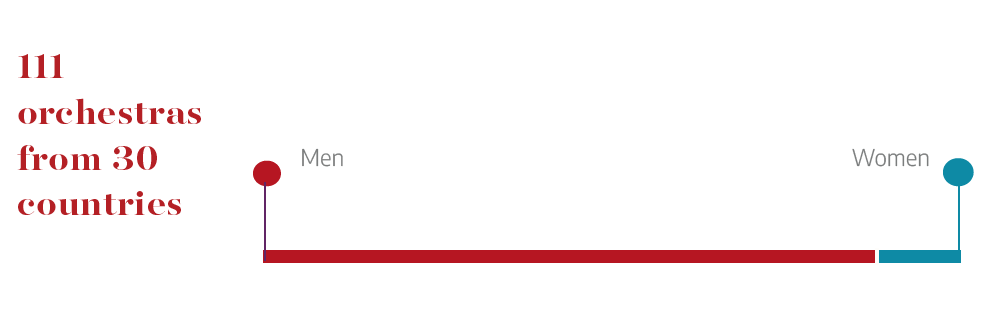
- Works by male composers occupy an absolute dominant position, accounting for as high as 92.5%
- Works by female composers account for only 7.5%
- All of the top 10 most performed composers are deceased white European males
- The total number of performances of works by these 10 male composers is more than four times the sum of all works by female composers
- Among all composers surveyed, the highest-ranked female (Lili Boulanger) only placed 52nd.
This inevitably raises the question that has haunted classical music history:Why are there almost no women in Western music history?
Faced with this absence, people instinctively fall back on a meritocratic explanation: if women are nowhere to be found in the historical and modern orchestral repertoire, they must have lacked creative talent; or they simply failed to produce great works on par with Beethoven and Mozart. In other words, mainstream thought leans toward a crude Darwinism:Whoever writes best is preserved by history.
At first glance this seems plausible, but when we revisit the relevant archives and statistics, the argument quickly falls apart.
Even if we had never studied music history, the gender disparity of 7.5% versus 92.5% defies simple probability. Moreover, from a historical perspective: if women truly lost in a fair artistic survival of the fittest, the record would at least show traces of their participation and eventual defeat.
But the archival evidence tells a very different story. If we examine the registration records of the Paris Conservatory and the St. Petersburg Conservatory in the 19th century, we find that female graduates accounted for an astonishing 47% and over 60% of the student body, respectively. In other words, women held a numerical advantage in professional music education during that era.
Yet history has only recorded the men who lost the competition. Take 18th-century Vienna: Antonio Salieri was a successful and wealthy court composer, but in the 19th-century deification of classical music, he was portrayed as having lost to Mozart. Still, history did not erase him: his manuscripts were carefully preserved, his life meticulously studied and documented. History generously reserved a full seat for him—even if only as a “mediocre musician” serving as a foil to genius.
This reveals a brutally painful truth: to understand why women are nearly absent from Western music history, we must first abandon the condescending assumption that they lacked talent and instead examinehow women were systematically excluded from history.。
In this process, we must introduce a crucial mechanism—the canon. In classical music's power-laden history, entering the canon requires far more than sheer compositional talent. To become a classic, a work needs access to elite education, publication channels, the power to conduct premieres, repeated performances by orchestras, alignment with critics' standards, and ultimately, institutional recognition.
For women in history, the very path that helped male composers achieve immortality was fraught with pitfalls at every step.
#The Discipline of Education: 'Can You Study Music?'
To enter the list of 'canon' revered by later generations, obtaining a professional music education is undoubtedly a foundational step. But it is precisely this step that hides the biggest trap. This system, through meticulous
operation, gradually eliminates women from the historical candidate list without them even realizing it.
It does not rudely 'forbid you from learning,' but rather divides education into three progressively higher thresholds: family makes you unwilling, school makes you unable, and society tells you 'you shouldn't.'
Family Education: Depriving You of 'Career Ambition'
You are extremely musically talented, able to improvise variations on the piano at age 5, and wrote your first sonata at 12. Your parents are very open-minded and wealthy; they hired the most expensive tutors in the city for you and bought you the best grand piano. Before you turn 18, your world is filled with harmony, counterpoint, and endless praise. You even secretly plan a grand symphony in your diary, happily believing that your parents are grooming you to be the next Mozart or Beethoven.
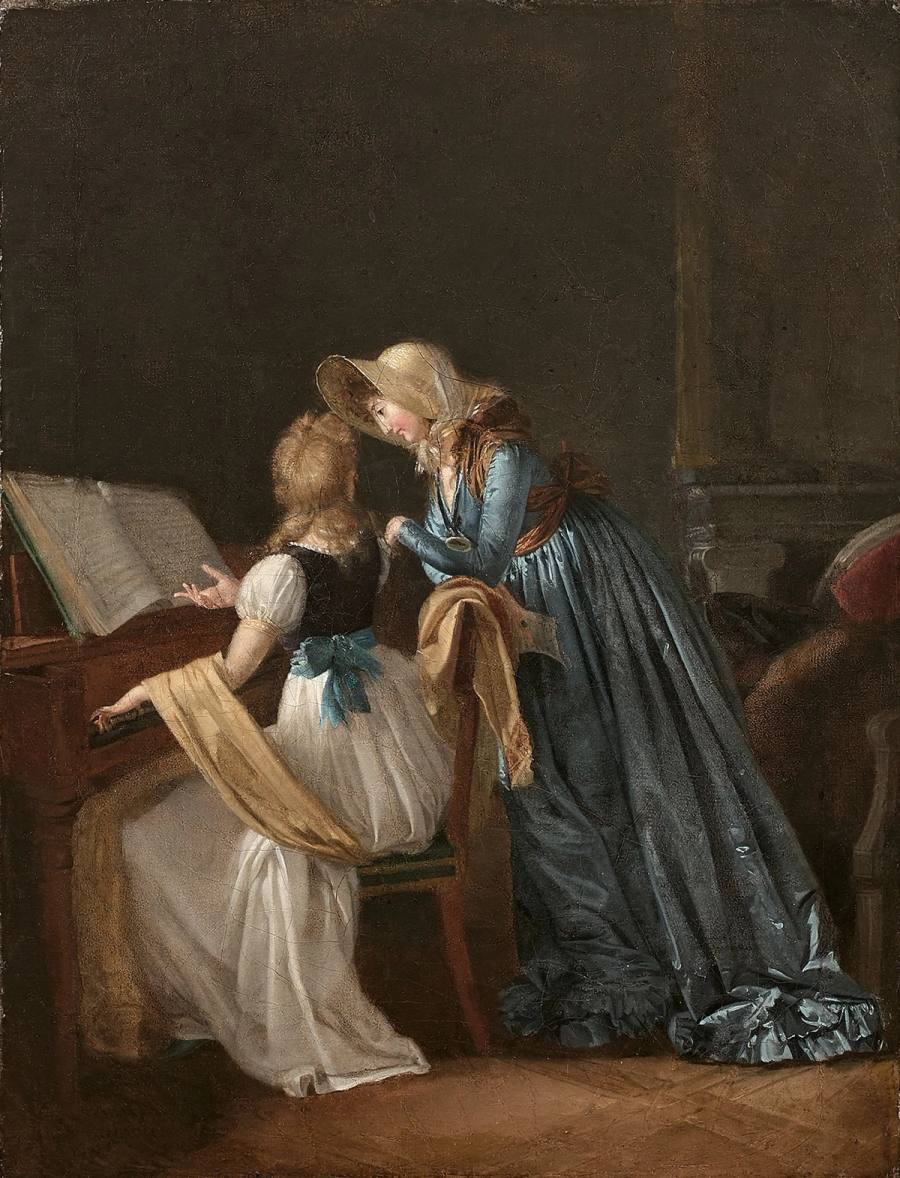
But on the day of your 18th birthday, the coming-of-age dinner arrives as scheduled, and you suddenly realize that the gears of destiny are turning in a completely absurd direction.
Your brother packed his bags, taking his concerto—far less mature than yours—and boarded the carriage to Leipzig for advanced study, ready to receive the public's flowers and applause. Meanwhile, your mother dragged you into the fitting room, laced you into a suffocating corset, and taught you to play a Mozart piano sonata—then considered suitable for women—with the most elegant posture in high-society salons.
Only at that moment did you realize: in elite families, music education was indeed a necessity, but for men and women, it was worlds apart from the very beginning.
For men, music was a career ladder to the public sphere, winning fame and social status. For women, musical talent was merely a high-end chip to enhance social value and gain favor in the marriage market. All your talent was not to make you an 'independent person'; you could only become 'a descendant of a famous person' or 'the wife of a famous person.'
You felt angry. You tried to lock yourself in your room to continue writing that symphony. But you sadly discovered that you had no 'room of one's own.'
The time you originally used to conceive grand orchestration was forcibly fragmented, filled with embroidery, needlework, family ledgers, and endless etiquette for entertaining guests. Your manuscripts could only be hastily tucked into the gaps of household chores. You had no door you could lock, because in this family, a girl's time and space were inherently public property belonging to 'the family.'
You are not alone. In real history, that talented girl—whom even the Queen of England cherished for her works—Fanny Mendelssohn1, faced the exact same moment. Her father, the same man who had spent generously on her music education, delivered his final verdict in a letter:
'Music may become your brother Felix's career, but for you, it can and must only be an ornament, never the foundation of your existence and actions.'
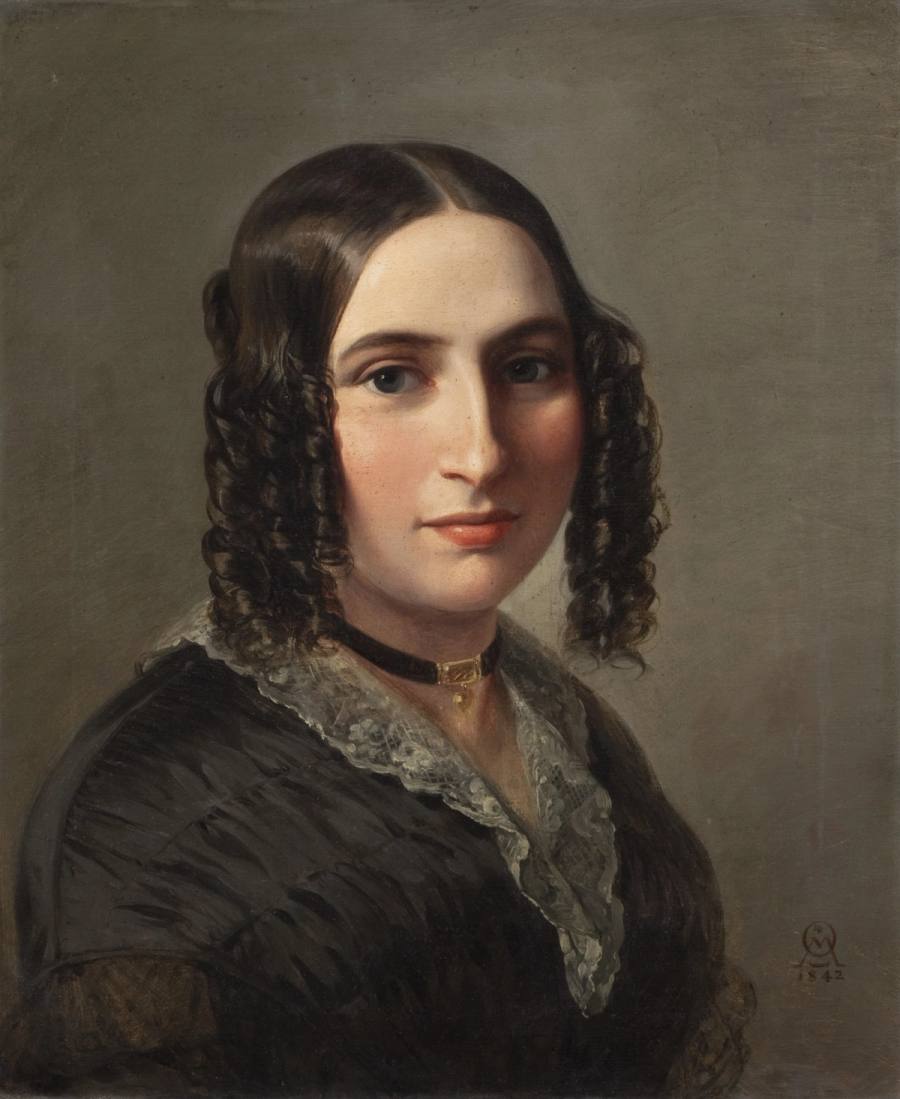
Women appear free on the path of music education, but in reality they are spreading their wings in a gilded cage. Family education completes the first discipline for women with musical dreams: it not only deprives you of the physical right to enter the public sphere, but also spiritually kills your 'career ambition.' Compared to becoming an excellent musician, you need to learn how to be a good wife and mother.
But you are unwilling to accept this. Looking at the incomplete symphony draft in your hands, a rebellious thought arises: since your family only understands these decayed rules, why not refuse to marry and instead apply to the conservatory? As long as you rely on absolute strength to enter that highest institution, you can prove yourself—prove that you are no worse than those male musicians, prove that women can also be musicians.
You push open the door of your home with naive resolve. But you don't know that in the ivory tower of the conservatory, an even denser and more hypocritical net has already been woven for you.
The Illusion of School: Invisible Walls in the Ivory Tower
With absolute talent and day-and-night hard practice, you finally gain admission to that dream top institution—such as the Paris Conservatory or the Saint Petersburg Conservatory.
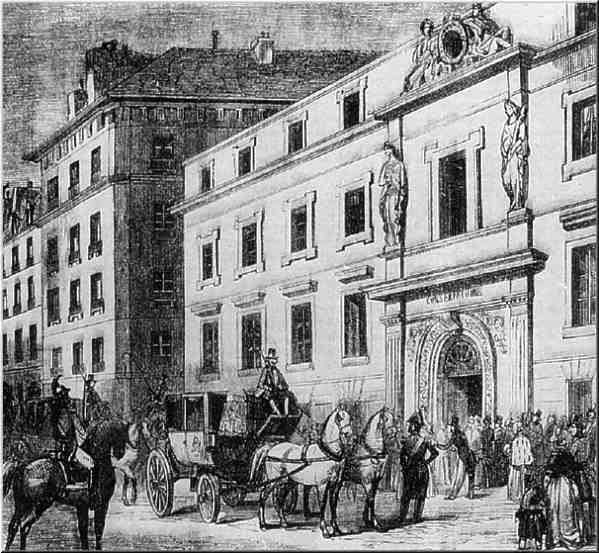
On the first day of school, you are pleasantly surprised to find that the conservatory is not full of withered old men and arrogant young gentlemen. The number of female students is even beyond your imagination—in your cohort they make up 47%, and in some years as high as 60%. You think this is paradise for realizing your musical dreams. Every female student who comes here thinks the same: that as long as they endure the rigorous exams and win the highest honors, they can legitimately become a composer and make a living from it.
But all the beauty in this ivory tower may be just an illusion.
You realize that even though you and your male classmates sit in the same classroom, the "hidden resources" available to you are completely fractured. The professor who holds the power to decide whether a work gets published only offers a few polite comments on your compositions. Then, he turns around and pours all the core composition techniques and most valuable connections onto a male classmate whose talent is even inferior to yours. The law of "a great teacher produces a great student" seems not to apply to you.
Then came the final exam. You had prepared a Beethoven sonata to demonstrate your understanding of complex structures and grand music. But the professor frowned, took away your score, and handed you an early Haydn piece or a Chopin nocturne.
He earnestly told you that Beethoven's works are too grand for you, not suitable for a female player, and you'd be accused of "pretending to play like a man." Women should play pieces that are "elegant, gentle, and ornamental." The canon system never intended for you to access its core from the start.
Only when graduation season arrived did you face the most fatal blow.
Your male classmates began preparing for their concerto debuts, ready to take up the baton and step onto the public stage. Meanwhile, the professor handed you a recommendation letter to become a private piano tutor at a nobleman's house. He smiled and congratulated you, praising that you would have a "perfect pre-marriage respectable income."
You struggled to escape the "private sphere" of your family, full of hope that school would ferry you to the sea of the "public sphere," but you never expected that the end of schooling would just be another way to stuff you back into a different "private sphere."
Furious, you tore up the letter of recommendation. You swore you would never be a tutor. You would go directly to the market and publicly perform your original symphony!
Society's Strangulation: The "Medical" Threat
When you tried to stand on the public stage as a true 'professional female musician,' nineteenth-century psychiatrists and gynecologists joined forces to create an all-encompassing medical discourse system for you. One day, when you felt exhausted from staying up late revising the score, an authoritative medical journal declared: this is a terminal illness called 'piano plague.'
In an unquestionable tone, doctors announced to society: overly complex musical training is equivalent to overloaded academic research; it exhausts women's limited brainpower. Those high-frequency musical vibrations directly stimulate women's extremely fragile nervous systems. If you continue to struggle with those difficult symphonies and complex counterpoint, you would not only suffer from depression and hysteria, but more terrifyingly, it would damage your reproductive organs, causing menstrual irregularities, dysmenorrhea, and even permanent infertility.
You thought it was sheer nonsense. But in that era, that was the 'truth' that the whole society believed in.
This medical lie became the perfect excuse for public music institutions to completely expel you. In 1866, when you brought your thick résumé and tried to join the top-tier 'Royal Musicians' Association' formed by the merger of two societies, you were mercilessly turned away.
You asked them why. Was your work not good enough, or your skill not proficient enough?
The clerk didn't even glance at your score, and coldly read out the rejection reason from the official document: 'Women's delicate physique is not suited for the heavy professional duties that members may be required to undertake.'
At this point, your career was completely sentenced to death.
In this layer-by-layer meat grinder, all your talent, ambition, and struggle were crushed to pieces before they even had a chance to reach publishers and music critics. In this game to enter the 'Canon,' society never intended to give you a ticket from the very beginning.
#Publishing and Market: “Even if you write it, can you get credit?”
Before the 18th century, the music market was actually very similar to today's pop scene—audiences preferred “new songs,” and a piece was often performed only once and then forgotten. But by the 19th century, music publishing and performance had become highly commercialized. For publishers and theater owners, promoting newcomers was too risky. Capital demanded surefire profits, and the safest approach was to repeatedly publish and perform the works of already established male masters (such as Haydn and Mozart). This is partly why the concept of the “Canon” in classical music first emerged—the market needed a safe way to “reheat leftovers.”
How could audiences be persuaded to willingly listen to these reheated offerings?
As scholar Marcia J. Citron points out in her discussion of the “Canon,” the canon is not naturally formed but is constructed by public acceptance, publishing, education, performance, and criticism. In this process of canon-making, publishers and music critics who held the power of discourse acted as gatekeepers. By compiling textbooks and writing reviews, they determined who were “masters” and which pieces were “masterpieces,” and the public followed along. Under this commercial mechanism that only exalted “established male masters,” “masculinity” and “classical music” became conflated, leaving new works by women inherently uncompetitive and extremely difficult to get published.
Beyond external commercial exclusion, women also faced internal suppression aimed at protecting “male dignity.” If a woman displayed exceptional compositional talent, it was often perceived by men as a provocation.
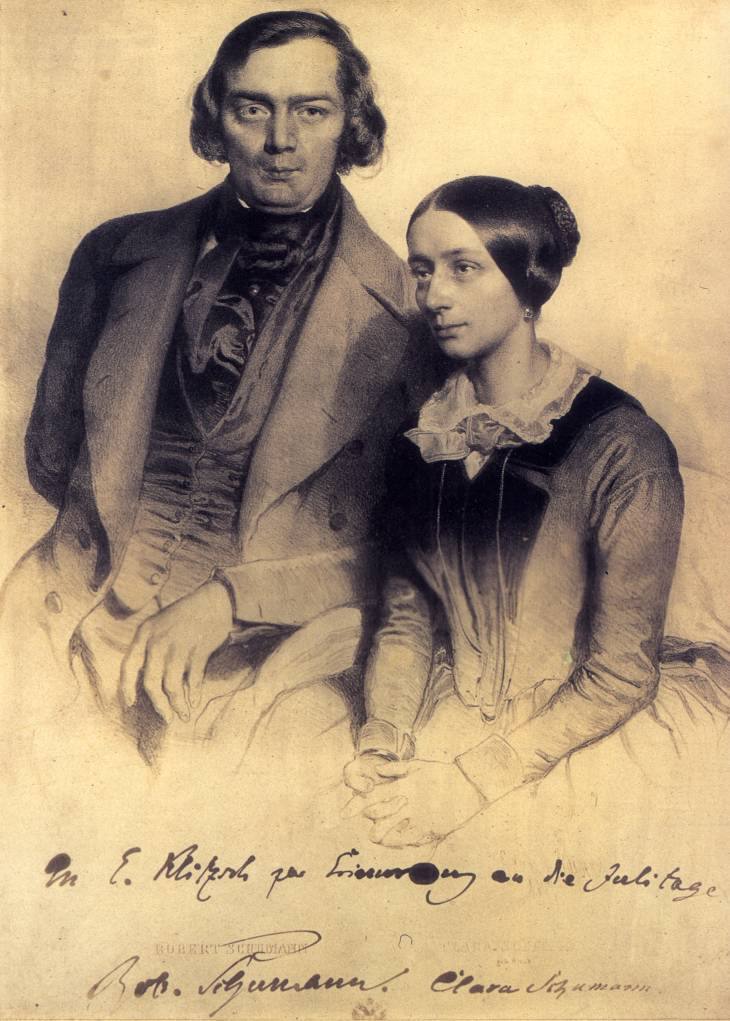
Take the famous pianist and composer Clara Schumann, for example. Despite her brilliance, her husband Robert Schumann behaved very domineeringly in their marriage. To preserve his masculine dignity, Robert not only limited Clara's performances and harshly criticized her interpretations, but even demanded that she stop practicing—on the grounds that it would “disturb his composing.” He also refused to let Clara earn money through concert tours, even though she desperately wanted to share the financial burden with her talent. In the end, even Clara herself came to believe in the highly disciplining maxim: “Women should not desire to compose—no woman has ever been able to do so.”
In such a harsh environment, women had to take extreme measures to get their works published. According to quantitative research in Where are the Female Composers?, female composers were three times more likely than men to use pseudonyms, and four times more likely to use male pseudonyms. They had to erase their female identity in their names in order to get their works out into the world.
Fanny Mendelssohn's story is the quintessential tragedy. Despite her extraordinary talent, her works were long published under her brother Felix's name. In 1842, when Felix visited the British royal family, Queen Victoria herself performed her favorite song 'Italien.' Faced with the Queen's praise, Felix had to blushingly confess on the spot that the true composer of the song was his sister Fanny.
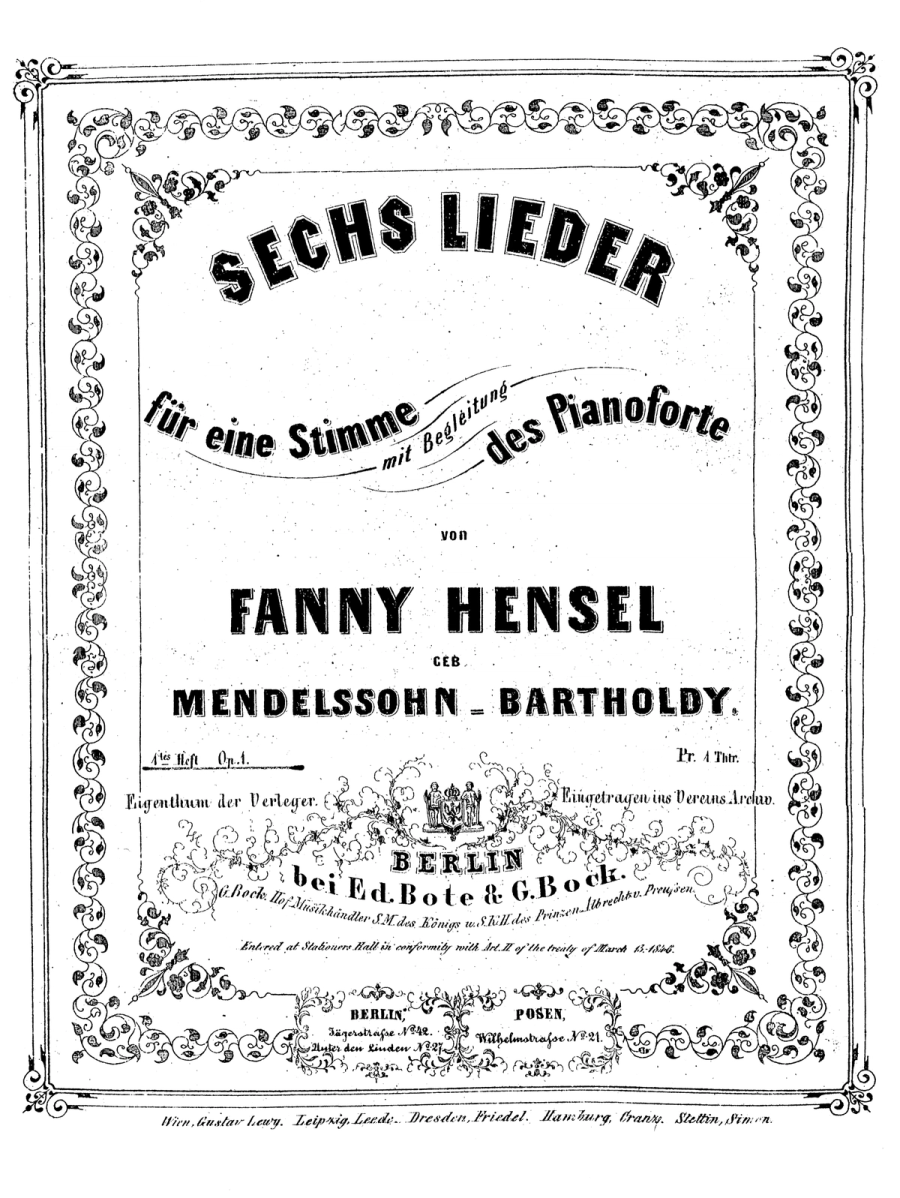
It was not until she turned 40, encouraged by the success of her salons and supported by her husband, that Fanny finally broke free and published her first work under her own name (Op. 1). But fate played a cruel trick; she died just a year later. Fanny's 'belated success' also reflects the immense societal resistance of the time: Even with exceptional talent, recognition from the Queen, and support from her brother and husband, as long as the social system did not accept it, it remained nearly impossible for women to leave their real names in the publishing world. The aforementioned quantitative study confirms this: among those with a musician father, female composers were three times more likely than male composers to have a musician mother. Even with the backing of musician parents, female composers did not gain a greater relative advantage over males.
#Premieres and Institutional Barriers: The Uncrossable Conductor's Podium
Even if a woman's works were published, to bring a symphony into the public eye and establish its historical status, a public premiere was necessary. This required someone—usually the composer—to step onto the orchestra's podium. However, in this construction of authority, the image of the conductor systematically excluded women on both physical and institutional levels.
Traditional standards set clear requirements for a conductor's posture, tone of voice, gestures, gaze, and even breathing—requirements that were inherently tied to masculine traits and regarded by the industry as the benchmarks of 'perfection' and 'correctness.'
When women attempted to step onto the podium and demonstrate authority, they were often perceived as lacking the 'natural' masculine body language and confidence, since women could not possess the same physiological characteristics and skeletal size as men. For example, one young woman who tried conducting received feedback that she 'just looked like she was doing ballet.'
Due to objective physiological differences, women cannot fully transform into male body postures; they can only approach through deliberate imitation. This often leaves female conductors unable to focus entirely on the music itself, instead remaining tense and expending energy on 'how not to make mistakes.' Many women who have become conductors or are studying conducting come to believe that they are inherently incapable and give up the pursuit. This contributes to the declining share of women in classical music while also sending a negative signal to future students.
The authority of a conductor is not only built on professional skills, but also permeated with a strong sense of exclusivity in the work environment. This authority is sometimes accompanied by moody emotional control, intimidation, and sexually suggestive crude humor.
A senior vocal coach once explicitly pointed out that it is precisely this kind of crude humor and communication style with strong gender undertones that has created a huge barrier in the workplace, becoming a major reason why historically few women have become conductors. Women in such an oppressive environment find it difficult to gain equal professional respect.
At the same time, under the traditional conductor-orchestra relationship, men and women form distinctly different psychological identification patterns. Boys can find a sense of 'homosocial' identification from male conductors, easily projecting themselves into the leader role, thereby gaining positive motivation for career development.
Conversely, girls are often placed in a submissive position in the orchestra. Many women feel extremely humiliated if publicly criticized by the conductor during rehearsal, feeling 'utterly small.' This negative psychological reinforcement fundamentally blocks their path to building confidence and attaining authoritative positions.
#Double Standards of Critique and Discourse: 'Do You Get a Chance to Be Right?'
To fundamentally disqualify women from creative roles, critics also put forward a set of gender-based philosophical biases. A representative view came from 19th-century American music writer George Upton. In his 1880 book 'Woman in Music,' he proposed that while women are inherently rich in emotion, they lack the logical ability to effectively transform these emotions into musical composition.
He believed that women's true role in music is not as composers, but as 'assistants or muses to successful male composers, and as performers.' This view had a significant impact on generations of music scholars and critics at the time, providing theoretical justification for the subsequent suppression of female musicians.
With the above theoretical foundation in place, critics still needed to guard against a real scenario: if women performed grand and powerful music on stage, the theory would be overturned. Therefore, the critics introduced a mechanism of "gendered repertoire" segregation.
Music at the time had clear gender divisions, especially in formal settings and conservatories:
- Masculine repertoire: Beethoven's works (especially his middle-period sonatas and concertos) were characterized as a "male domain" representing the sublime, grand, and powerful.
- Feminine repertoire: Early keyboard music (such as that of Bach, Haydn, Mozart, and Hummel) was labeled as graceful, decorative, gentle, or even "childish," considered exclusive territory for women.
Through the gendered division of repertoire, male critics successfully placed female pianists on stage in a logical deadlock, attacked from both sides. No matter what women chose, critics would offer negative reviews. If a woman performed Beethoven's works representing power, she was violating tradition; critics would accuse her of "pretending to be masculine" and dismiss it as "a pathetic obstinacy in women attempting to make music art a profession." If a woman complied with the rules and performed works classified as feminine, like Mozart, critics would shift the standard, accusing these works of being technically easy, thereby mocking the female performer for lacking skill—since she had no technique, she could only play simple pieces.
Furthermore, when female pianists took the stage, critics often diverted attention away from the music itself and instead judged their bodies and appearance, further undermining their authority in the professional sphere.
Under this absolute double standard, any artistic claim by women was twisted into a sign of incompetence.
In the 19th century, many female pianists were heavily involved in chamber music and the revival of early music. Their performance philosophy advocated "letting the work speak for itself," meaning strict fidelity to the score. However, mainstream critics at the time greatly favored Liszt's performance style, which emphasized individual heroism and virtuosity. Thus, critics scorned women's restrained, textually faithful playing, directly labeling it as "a faithful performance without virtuosity equals a declaration of the performer's mediocrity and incompetence."
#History Textbooks and 'Compensatory History': 'Can You Really Be Left Behind?'
Through the series of explorations above, it's not hard to see that the 'elite' status of classical music was not naturally formed but artificially constructed. To maintain this orthodox elite attribute, historians and textbook compilers deliberately created a 'single, linear evolutionary view of history.'
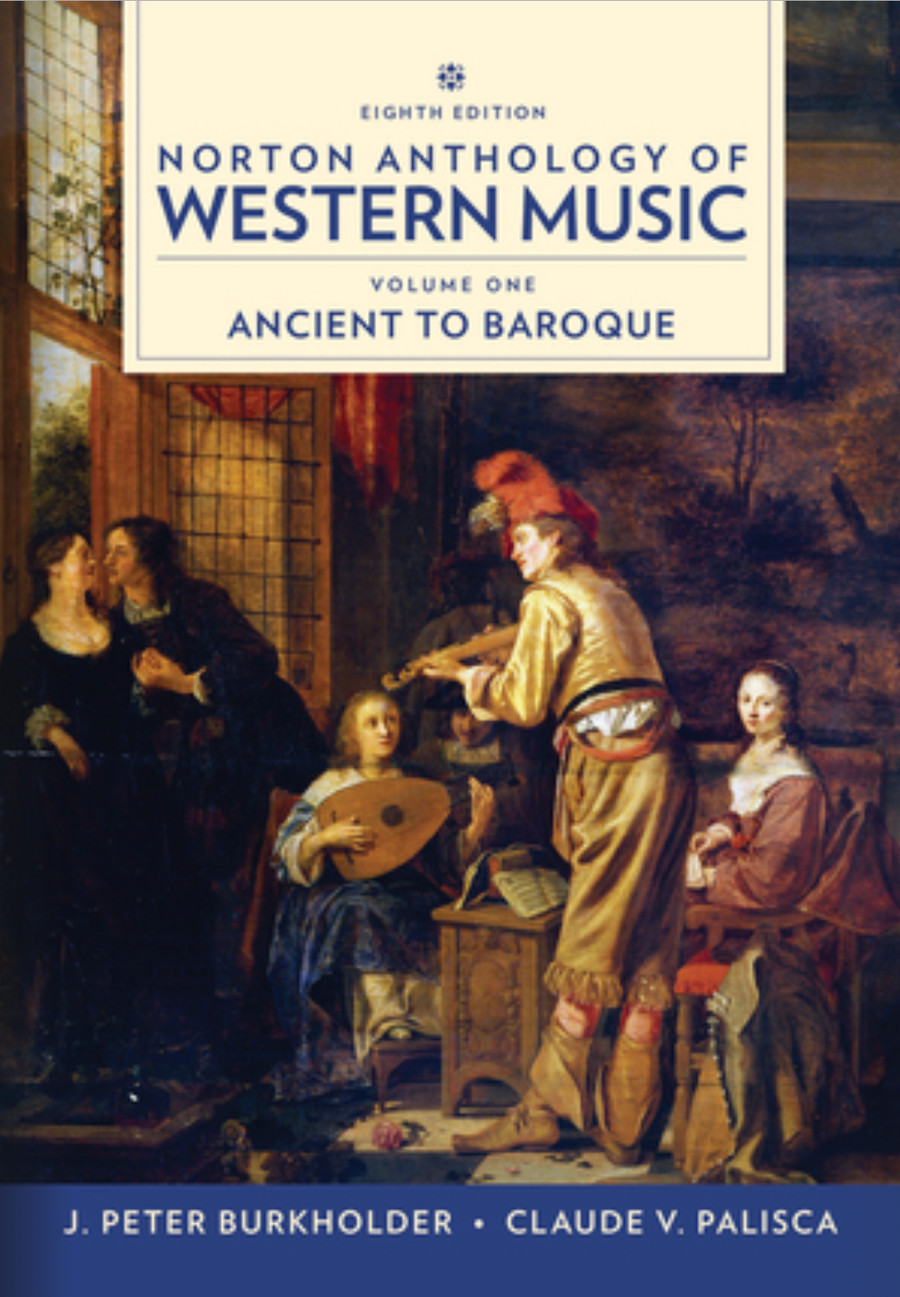
This view of history is fully reflected in the compilation of textbooks. Taking the most dominant textbook companion anthology in American university music history courses, *The Norton Anthology of Western Music*, as an example, over 40 years and eight editions, it has profoundly constructed the 'teaching canon' of Western music. In the era dominated by Palisca (1st to 4th editions, 1980-2001), the textbook strongly emphasized the linear evolution of 'elite art,' tending to select works that could demonstrate how styles evolved. This compilation method, with its strong historical teleology, instilled in students the notion that music has only this single evolutionary path. By establishing this orthodox 'linearity,' the textbook conveniently defined and excluded so-called 'non-art' music in historical writing.
In this linear view of history, Western music history established a key evaluation criterion: 'score-centrism' (fascination with written form). Western music places great importance on the musical score written in black and white, believing that only by becoming a visible and tangible 'object' can music be preserved, repeatedly studied, and ultimately enter history.
This creates a vicious cycle with the 'publishing barriers' mentioned earlier: women were excluded from commercial publishing and could not turn their works into widely circulated scores; and because they did not leave 'authoritative scores' sufficient to prove their stylistic evolution, they naturally could not be included in the linear history built on scores.
This absolute reliance on written scores directly led to musical forms that relied on oral transmission, improvisation, and private salon dissemination never being able to enter the hall of mainstream classics. Therefore, world ethnic music, early authentic jazz, and a large number of women active in patronage, performance, and dissemination were all excluded by this single historical standard. Even though later, in the Burkholder era (5th to 8th editions, 2006-2019), the *Norton Anthology* attempted to introduce non-classical genres, the 'classical tradition' remained unchanged as the core. Non-classical music still existed as the 'other' of classical music; by the 8th edition, works by female composers accounted for only 5.7% of the total.
In response to today's demands for equality, many modern music history textbooks have made some superficial modifications: to show gender equality, compilers will forcibly insert the names of a few female composers into the originally all-male table of contents and narrative main line (for example, symbolically adding a piece by Clara Schumann).
However, this way of expression requires extreme caution. In academia, this is called 'compensatory history.' It is dangerous because it is still built on a classical music worldview dominated by male experience. It does not reflect on whether the criteria for entering the canon are themselves reasonable, but merely caters to current 'political correctness,' patching in a few marginal positions for women. This approach not only fails to achieve genuine equality but also implicitly acknowledges and reinforces the original exclusion mechanism—taking for granted that standards set by men remain the only truth.
#Conclusion
Looking at these five interlocking steps, we can clearly see: music history has never been an objective record that 'encompasses everything,' but rather a selective writing of power. Women's 'absence' in Western music history is not due to lack of talent, but because they were deprived of resources by education, denied their names by publishing, refused physical presence by premieres, had their ideas distorted by criticism, and finally had their traces completely erased by linear textbooks that only value musical scores.
A true social and cultural history of music cannot be merely a 'history of score-writing.' To answer the question 'Why are there no women in music history?', true awakening is not to rigidly stuff a few women into the patriarchal 'Canon,' but to completely break down this set of evaluation criteria, bringing patrons, disseminators, consumers, and all marginalized groups in history back into the research horizon. Only when we stop measuring music with a single yardstick can the silenced contributions of women truly see the light of day!
Notes
- 1In 1842, Felix visited the British royal family, and Queen Victoria personally sang her favorite song 'Italien.' Felix had to blushingly confess to the queen on the spot that the real composer of the song was his sister Fanny.↩